
Web design trends change quickly, but local business websites do not need to chase every new design fad. The best website is still one that makes it easy for a visitor to understand what you do, where you work, why they should trust you, and how to contact you.
ProEngage originally published this article in 2017 and later updated it in 2020. A lot has changed since then. Mobile browsing is now the standard, website speed matters more than ever, search engines evaluate the mobile version of a website, and customers expect a site to be fast, clear, secure, and easy to use.
For a local company, good web design is not about adding every new effect or technology available. It is about choosing the design elements that help real customers take the next step.
Web Design Trends That Matter for Local Businesses
Some trends come and go. Others become permanent parts of good website design. The following are the areas we believe matter most for local business websites today.
Mobile-First Website Design
Mobile-friendly design was once considered an extra feature. Today it is the starting point.
Google now uses the mobile version of website content for indexing and ranking, which makes it important that the information available on a desktop website is also accessible and easy to use on a phone. A responsive website should automatically adjust its layout, images, navigation, forms, buttons, and text for different screen sizes.
A mobile visitor should not have to zoom in, fight with oversized graphics, wait for a complicated animation, or search for a phone number. Important actions such as calling, requesting information, viewing services, and finding a location should be obvious.
Google provides additional information about mobile-first indexing and recommends responsive design as one way to provide a strong mobile experience.
Website Speed and Core Web Vitals
Visual design matters, but a beautiful website that takes too long to load can lose the customer before the design has a chance to make an impression.
Modern web design should consider performance from the beginning. Oversized images, unnecessary scripts, elaborate sliders, video backgrounds, excessive animation, and too many third-party tools can all make a website heavier than it needs to be.
Google’s Core Web Vitals measure important parts of the user experience, including loading performance, responsiveness, and visual stability. These metrics are known as Largest Contentful Paint (LCP), Interaction to Next Paint (INP), and Cumulative Layout Shift (CLS).
The goal is not to build a plain website simply to earn a speed score. The goal is to create a site that looks professional while loading quickly and responding smoothly for actual visitors.
Simple Navigation and Clear Content
One of the strongest web design trends is actually less complexity.
Visitors should be able to quickly determine what a company offers and move directly to the service or information they need. For most local businesses, a clear navigation structure with services, service areas, about information, reviews, frequently asked questions, and contact options is more useful than a complicated menu filled with clever labels.
Good design helps organize the content instead of competing with it. Headings, short sections, useful images, white space, buttons, internal links, and readable text can guide someone through a page naturally.
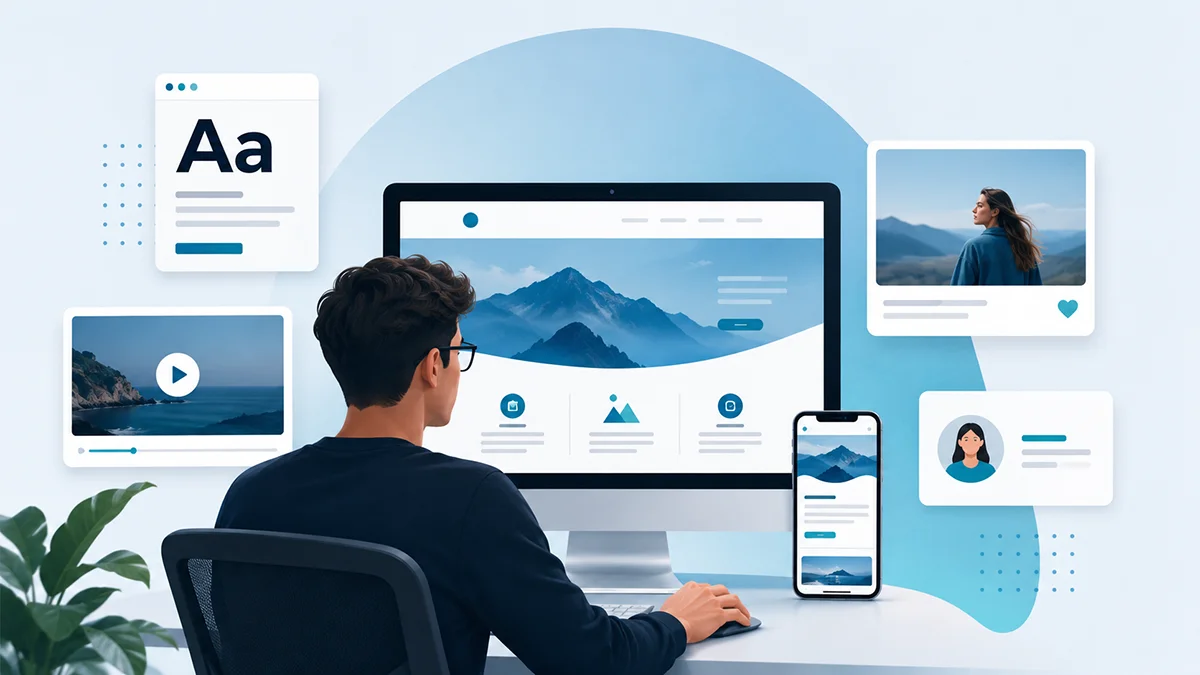
Authentic Images Over Generic Stock Photography
Stock photography still has a place, but original images are usually much stronger for a local business. Real photos of the company, employees, completed projects, office, vehicles, equipment, products, and service area help visitors understand who they are considering hiring.
Original photography can also reinforce local relevance and make important pages visually different from competitors using the same stock-photo libraries.
The key is quality rather than quantity. A few clear, properly sized images that support the page are generally better than filling every section with decorative graphics.
Use Video Where It Helps the Visitor
Video remains an effective way to demonstrate a service, introduce a company, show completed work, answer a common question, or explain something that is difficult to communicate with a still image.
However, more video is not automatically better design. Large autoplay videos and video backgrounds can become distracting, particularly on mobile devices where text has less room and connection speeds can vary.
When video is used, it should have a purpose. The visitor should still be able to understand the page and take action even if the video never plays.
Readable Typography and Accessible Design
Large typography remains popular, but readability is more important than simply making words bigger. Font choice, line height, contrast, spacing, button size, and the width of text columns all affect how comfortably someone can use a website.
A professional business website should also be designed with accessibility in mind. That includes descriptive image alt text, meaningful link text, logical heading structure, sufficient contrast, usable forms, keyboard-friendly navigation, and content that does not rely entirely on animation or visual effects.
Design Pages Around Search Intent
A modern website should not treat search engine optimization as something added after the design is finished.
Every important page should have a clear subject and purpose. A service page should explain that service. A location page should genuinely help someone in that area. Titles, headings, written content, internal links, images, structured data, and calls to action should all reinforce what the page is about.
This is where local SEO and web design work together. Search engines need to understand the page, while visitors need to immediately recognize that they have found the right business.
AI Should Support the Website, Not Replace the Business
Artificial intelligence has become part of website design, content development, search, customer service, and marketing. Used correctly, these tools can make businesses more efficient.
What they should not do is make every business website look and sound the same. Generic AI-generated copy, repetitive imagery, unnecessary chat tools, or pages created simply to increase the size of a website can weaken the experience rather than improve it.
The strongest local websites still communicate real experience, real services, real locations, real customer questions, and real reasons to choose the company.
Web Design Trends: The Bottom Line
The most important web design trend is still user experience. A local business website should be attractive, but it should also be fast, mobile-friendly, easy to understand, easy to navigate, and designed around what potential customers are actually looking for.
That usually means using fewer gimmicks and putting more emphasis on clear messaging, useful content, original visuals, strong mobile design, search visibility, and obvious ways to contact the business.
If you are considering a new website or updating an older one, take a look at our website design portfolio or learn more about ProEngage Local’s web design services.
Web Design Trends FAQ
What is the most important web design trend for a local business?
Mobile usability remains one of the most important considerations. A local business website should load quickly, display clearly on a phone, make services easy to find, and provide obvious ways to call or contact the company.
Are video backgrounds good for business websites?
They can work in certain designs, but they should be used carefully. Video backgrounds can increase page weight, distract from important text, and become difficult to view on smaller screens. Video is most useful when it adds information rather than simply movement.
Does website design affect SEO?
Yes. Mobile usability, page speed, content organization, internal linking, navigation, accessibility, and the ability of search engines to understand a page are all connected to the way a website is designed and built.
Should a local business redesign its website every few years?
Not necessarily. A well-built website can be improved continuously instead of being replaced simply because a certain amount of time has passed. A redesign makes sense when the existing site is difficult to use, technically outdated, slow, poorly organized, no longer represents the business, or is limiting search visibility and conversions.